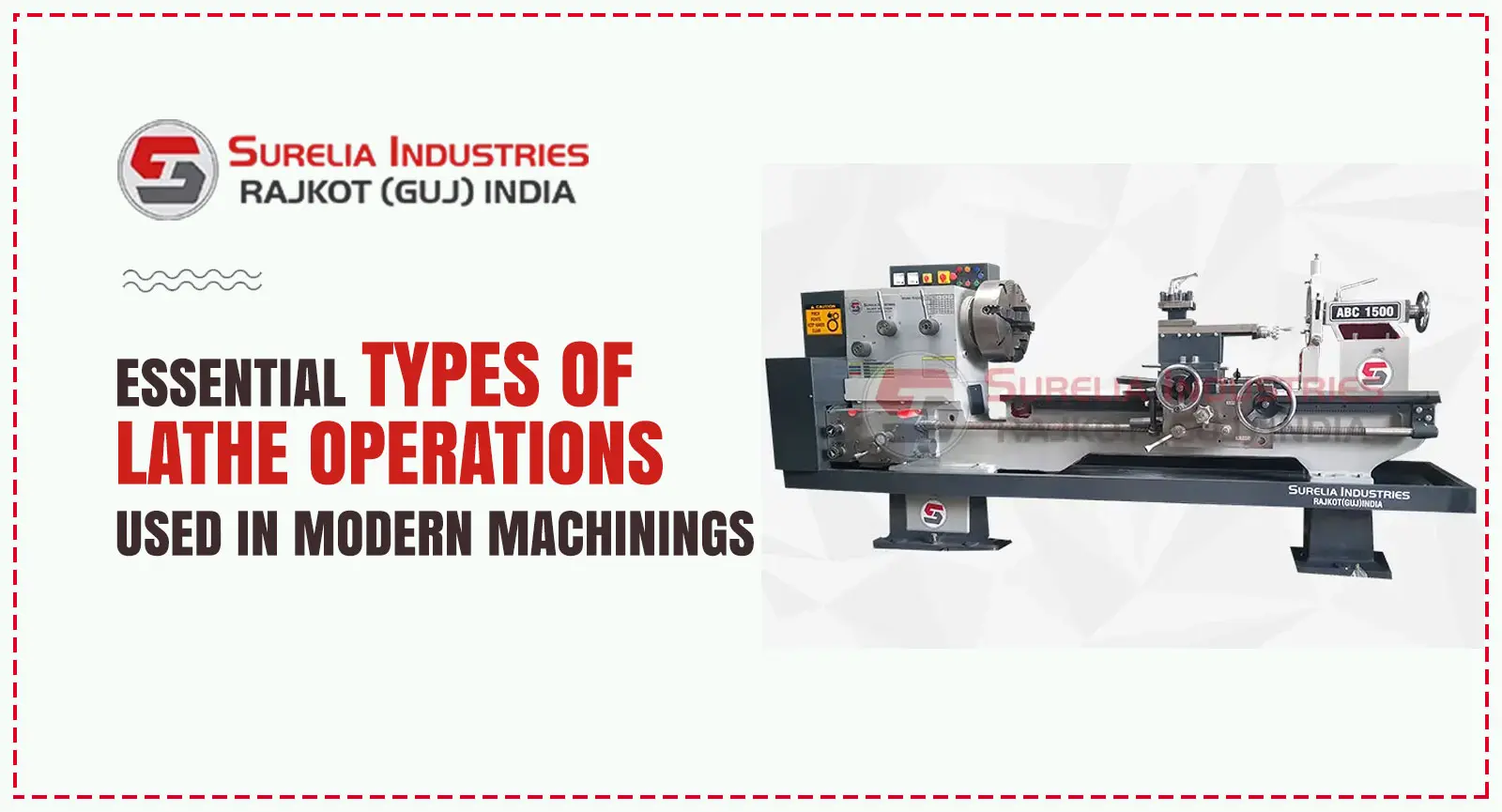
In the machining world, the lathe is basically the king of the workshop. Whether you are in a tiny garage or on a massive factory floor, a lathe machine is what makes precision work possible. If you’re just starting out, you’ve got to get a handle on the different things a lathe can do. You’ll see these techniques used for everything from small-scale light duty lathe machine operations to intense industrial tasks.
The best thing about a lathe is how much you can get done without ever moving your part to another machine. It saves time, keeps your measurements accurate, and honestly, just makes life easier. As customers ask for better finishes and tighter fits, knowing how these operations work becomes even more important.
Let’s break down the most common types of lathe operations and how they support modern machining needs.
Turning
Turning is usually the first skill you’ll master. Basically, you’re just shrinking the diameter of a piece of metal to make it a smooth, round cylinder. The material spins while your cutting tool slowly peels away the outside layer. You’ll use this to make things like rods, bolts, or shafts. It’s all about getting that outside dimension perfectly uniform from top to bottom.
Facing
Facing is what you do to get the end of your workpiece perfectly flat and square. It’s almost always the first step after you secure your material in the chuck. By cleaning up the end face, you make sure the part is exactly the right length. If you skip this or do a poor job, nothing else you make will fit together quite right later on.
Drilling
Most people think of a drill press when they need a hole, but doing it on a lathe machine is actually much more accurate. You hold the drill bit steady in the tailstock and let the material spin into it. This keeps the hole perfectly centered every time. It’s a massive time-saver because you can knock out your holes right after you finish your turning work, all in one go.
Boring
Once you’ve drilled a hole, it might not be the exact size or as smooth as you want it. That’s where boring comes in. You use a boring bar to clean up the inside of the hole and dial in the exact size you need. This is a huge deal in industrial lathe machine operations, where you’re making things like engine parts that need a perfect fit.
Thread Cutting
If your part needs to screw into something else, you’re going to be cutting threads. This is how we make the grooves for nuts and bolts. It takes a bit of focus to get the settings right so the “pitch” is perfect, but once you get it, you can make parts that lock together tightly. One of the abilities that sets professionals apart from novices is this one.
Knurling
Knurling is a bit of an outlier because you aren’t actually cutting any metal away. Instead, you use a tool to press a diamond or straight pattern into the surface. We do this to give a part a better grip, like on a handle or an adjustment knob. It’s a simple finishing touch that makes the part a lot more practical to use in the real world.
Conclusion
Every one of these operations is a building block for making a great part. The lathe machine handles everything from roughing out a shape to the final, tiny details that make a part work. When you care for the machine and use the right operation for the job, you’ll always get a better result.This is where a company like Surelia Industries really stands out. They’ve made a name for themselves by building lathes that can handle it all, from the simple light duty lathe machine operations to the toughest industrial operations. If you are looking for a machine that prioritizes durability and precision, Surelia Industries is definitely the name you want to look for.

Surelia Industries
Surelia Industries has immense expertise in the manufacturing of lathe machine. We have been providing top quality Lathe Machine to our clients since 1975.