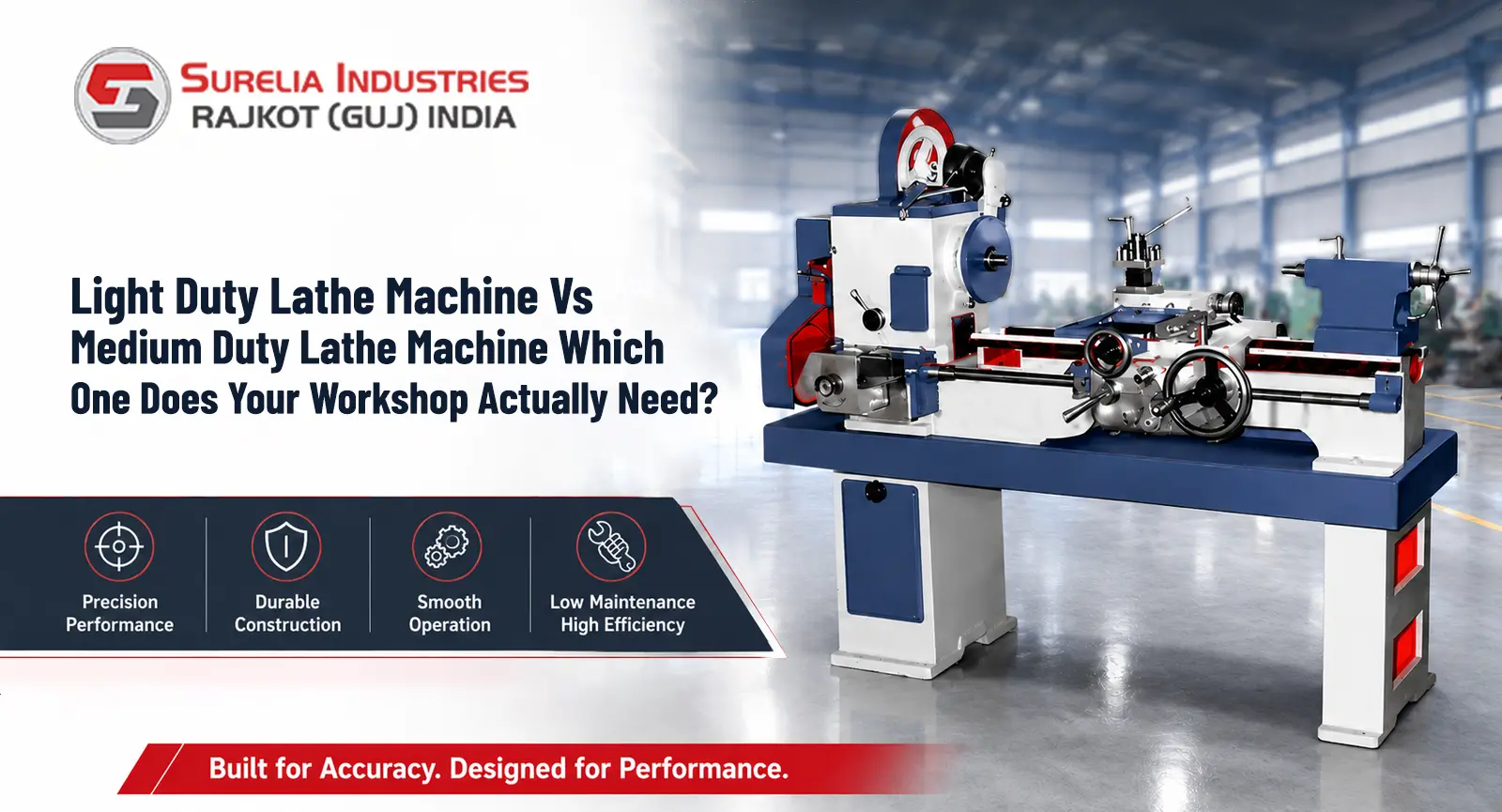
Overview – Choosing between a light duty and a medium duty lathe machine comes down to the size of the components you machine, the cutting forces your work involves, and how much floor space and motor power your workshop can accommodate. Both machines do similar things — turn, thread, face, groove, and drill — but they are built for different load ranges and workpiece sizes. Getting this wrong means either buying more machine than you need or running a machine beyond what it was designed for.
This Blog Covers:
Introduction
The difference between a light-duty and a medium duty lathe machine is not just about size. It is about what kind of work each machine is built to handle comfortably over its service life. Push a light duty machine into medium duty work and it wears faster, holds tolerances less reliably, and costs you more over time. Under-specify with a light duty machine when medium duty is what you need, and the results show up in surface finish, dimensional accuracy, and machine life.
The Key Differences at a Glance
The numbers tell most of the story. Surelia Industries manufactures both machines, and the specification differences between them reflect exactly where one ends and the other begins.
The light duty lathe machine has a centre height of 190mm and a swing over bed of 300mm. The medium duty machine steps up to 215mm or 255mm centre height with a swing over bed of 400mm or 480mm depending on the centre height option. That difference in swing diameter is the first and most practical distinction — the medium duty machine handles physically larger workpieces.
The spindle bore tells a similar story. The light duty machine has a 40mm spindle bore. The medium duty machine offers 50mm or 78mm spindle bore options. Larger spindle bore means larger bar stock can pass through the spindle for turning. For anyone regularly working with bar stock above 40mm diameter, the medium duty machine is the right choice on that criterion alone.
Bed Length and Between-Centres Capacity
Both machines are available in multiple bed lengths, but the medium duty range extends further.
The light-duty machine runs across four models — SILD-3 through SILD-6 — with between-centres distances from 380 mm up to 1115 mm and bed lengths from 3.5 ft to 6 ft.
The medium duty machine runs from SIMD-4 through SIMD-8, with between-centres distances from 550 mm up to 1500 mm and bed lengths from 4.5 ft to 8 ft. The 8ft SIMD-8 model accommodates components up to 1500 mm between centres, significantly beyond what the light-duty range can handle.
If the longest component you regularly machine sits within 1115 mm, the light-duty machine covers it. Beyond that, or if you regularly work near the upper end of the light-duty range, the medium duty machine gives you the headroom you need.
Motor Power and Cutting Capacity
The light duty lathe machine runs on a 1 HP motor at 1440 RPM. The medium duty machine uses a 1.5HP motor at the same RPM. The motor difference reflects the heavier cutting passes and larger workpiece diameters the medium duty machine is designed for.
A 1HP motor on a light duty machine is adequate for the work it is designed to handle — smaller components, moderate depth of cut, and softer to medium-hardness materials. Moving into deeper cuts, larger diameters, or harder materials needs the additional power the medium duty machine provides. Running a light duty machine under those conditions does not just affect surface finish — it shortens the service life of the motor, bearings, and bed over time.
Spindle Speed Range
The light duty machine in standard belt-driven configuration offers 8 speeds from 40 to 1000 RPM. The medium duty machine offers 8 speeds from 30 to 700 RPM in the standard configuration.
The lower maximum speed on the medium duty machine is not a limitation — it reflects the physics of turning larger diameters. Cutting speed in surface metres per minute stays similar across both machines, but the larger the workpiece diameter, the lower the RPM needed to achieve the same cutting speed. For small-diameter work at high RPM, the light duty machine is the more natural fit. For larger diameter turning where lower RPM is required, the medium duty machine’s speed range suits it better.
Both machines offer an optional all-geared headstock that extends the speed range to 45 to 2400 RPM and a Norton gearbox for 32-inch and 15 metric thread pitches.
Cross Slide and Tool Clearances
The medium duty machine has a larger cross-slide travel — 240 mm compared to 180 mm on the light duty machine. The tool shank size is also larger at 25 mm versus 20 mm. These differences influence the carriage travel over the part and the size of tooling the machine can accommodate. The practical advantage of the increased cross-slide travel of the medium duty machine is for facing operations on large-diameter components.
Which Applications Suit Each Machine?
Light duty lathe machine suits:
- Small workshops and tool rooms with limited floor space
- Training institutes for machinist education
- Automobile workshops for shafts, bushings, and small components
- Electrical and electronics manufacturing for small precision parts
- General-purpose turning of components within 300mm swing and 1115mm between centres
Medium duty lathe machine suits:
- Workshops regularly machining components above 300mm swing diameter
- Metalworking and tool room operations with heavier cutting requirements
- Applications needing larger spindle bore for bar stock above 40mm
- Longer components requiring more than 1115mm between centres
- Operations where deeper cuts and harder materials are part of the daily work
Find the Right Machine for Your Workshop
Surelia Industries has been a manufacturer of lathe machines since 1975 in Rajkot, Gujarat, supplying light-duty and medium-duty lathe machines in standard and customised configurations to workshops, manufacturers and training institutes across India and abroad. Reach us at +91 99099 19989 or sureliamachines@gmail.com.
Frequently Asked Questions
Can a light duty lathe machine handle the same materials as a medium duty machine?
What is the maximum bar stock diameter each machine can handle through the spindle?
Can both machines cut metric and inch threads?
Which machine is better for a training institute?

Surelia Industries
Surelia Industries has immense expertise in the manufacturing of lathe machine. We have been providing top quality Lathe Machine to our clients since 1975.