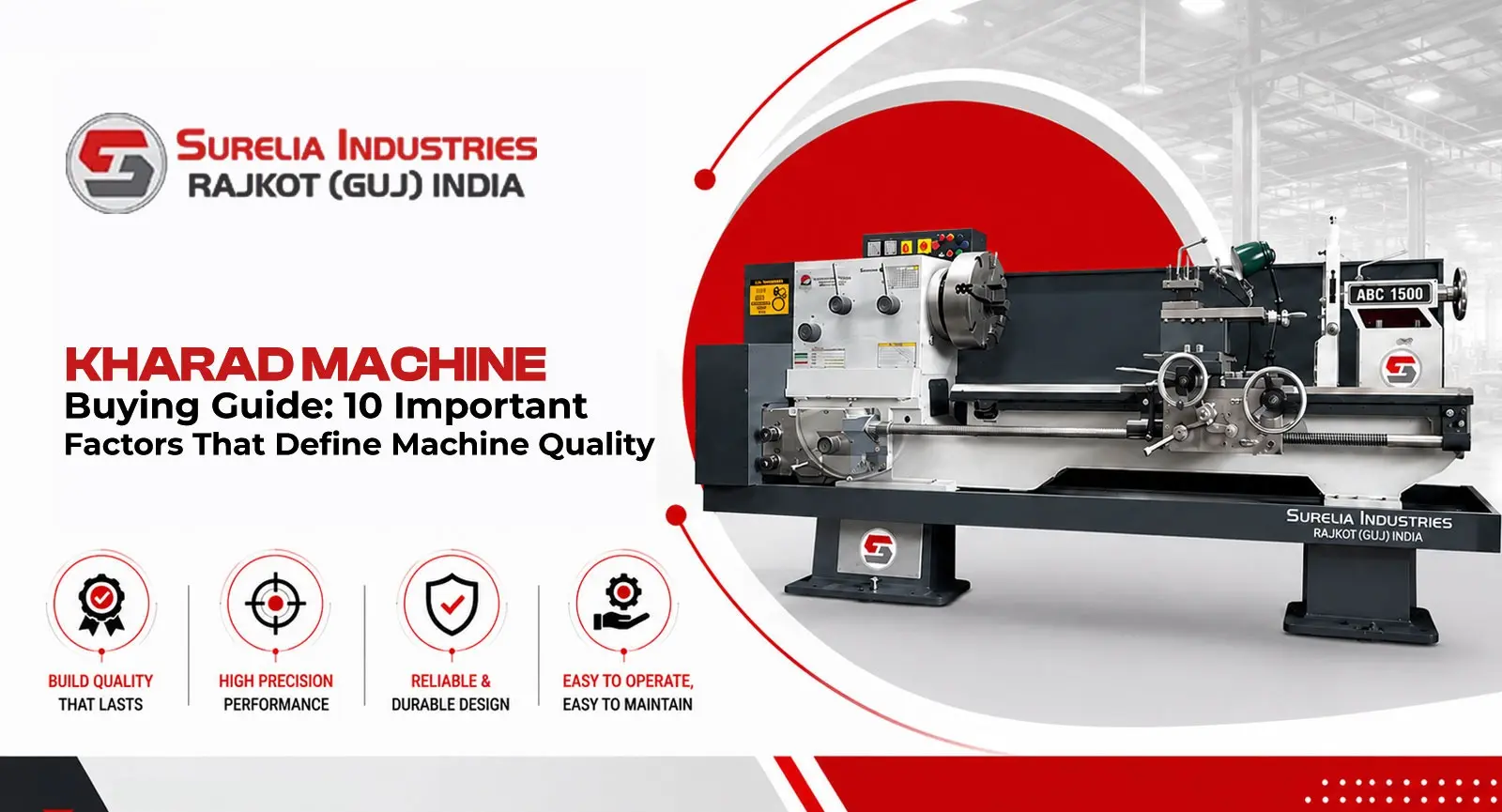
Overview – A Kharad Machine is a serious investment for any metalworking or fabrication business, and the difference between a good purchase and a poor one usually shows up months later, not on the showroom floor. Turning diameter, spindle speed, build material, and gearbox quality all play a part in how well the machine actually performs under daily, demanding use.
This Blog Covers:
Introduction
Buyers often focus purely on price when shopping for a Kharad machine, and this is understandable given how much these machines cost. But price alone tells you very little about how the machine will actually perform once it is running heavy, daily cycles on your shop floor. This blog goes through ten specific factors that genuinely define machine quality, so you know exactly what to check before signing on the dotted line.
Build and Structural Factors to Check
The foundation of any good Kharad machine lies in how it is actually built, and this is worth examining closely before anything else.
- Cast iron construction remains the standard for good reason. It absorbs vibration well and holds its shape under heavy load far better than lighter, cheaper materials.
- Bed length needs to match your actual job sizes, not just your current requirement, since a bed that is too short limits what you can turn on the machine entirely.
- Swing over bed: the maximum diameter the machine can accommodate decides whether larger workpieces will even fit, so this figure deserves careful attention against your typical job range.
- Corrosion resistance matters more than people initially think, particularly in humid environments or workshops near coastal regions where rust can quietly damage precision components over time.
- Weight and overall stability of the base also affect how well the machine handles vibration during heavy cuts, which is especially important when selecting a Heavy Duty Lathe Machine
Performance Specifications That Matter for a Kharad Machine
Beyond the basic structure, a handful of performance numbers genuinely decide how the machine handles actual work.
- Turning diameter capacity should comfortably exceed your typical job requirements, since buying right at the edge of your needs leaves no room for slightly larger work down the line.
- Spindle speed range affects both the type of material you can machine and how fine a finish you can achieve, so check this figure against your specific application needs.
- A Kharad machine with a well-built gearbox delivers smoother, more reliable power transmission, and this genuinely shows up in both cutting quality and how long the machine lasts.
- Semi-automatic control features reduce operator fatigue and improve consistency across repeated jobs, which matters a great deal on a busy production floor running long shifts.
- Precision tolerance, meaning how accurately the machine holds dimensions during a cut, should be confirmed against your actual tolerance requirements rather than assumed from a general specification sheet.
Practical Factors Before You Buy
A few more down-to-earth considerations round out the list for anyone buying a Kharad machine, and these often get overlooked in the excitement of comparing specifications.
- Energy consumption adds up considerably over years of continuous operation, so a slightly more efficient machine can genuinely save real money across its working life.
- Maintenance requirements vary between models, and a machine that is simple to service reduces both downtime and long-term repair costs significantly.
- Warranty terms deserve a proper read, not just a glance, since the length and actual coverage tell you a lot about how confident the manufacturer is in their own build quality.
- Genuinely check what spare parts availability looks like too. A machine that is cheap to buy but expensive or slow to get parts for often costs more in the long run.
- Delivery timelines and installation support are worth clarifying upfront as well, since a machine sitting uninstalled for weeks defeats the purpose of buying it in the first place.
Choosing the Right Kharad Machine Manufacturer
The manufacturer behind the machine matters just as much as the specifications printed on the brochure, and this is a point buyers frequently underestimate until something goes wrong later.
- A reliable Kharad machine manufacturer should have a genuine track record, verifiable through client references, years in business, and a portfolio of completed installations across different industries.
- Ask about quality control processes directly. Manufacturers with proper testing units and in-house R&D typically deliver more consistent, dependable machines than those without.
- After-sales support genuinely separates good manufacturers from average ones, particularly when something eventually needs servicing or a part needs replacing years down the line.
- Do not hesitate to ask for a live demonstration before purchase, since seeing the actual machine run gives you far more confidence than any specification sheet ever could.
- Pricing transparency matters too. A manufacturer willing to explain exactly what is included in the quoted price, installation, training, and initial servicing is generally more trustworthy than one that keeps costs vague until later.
Surelia Industries Guides You Here
Surelia Industries manufactures a range of Kharad Machine models built around the construction quality, precision, and reliability that demanding metalworking applications genuinely require. If you are evaluating your options, sharing your typical job sizes and production volume with their team can help identify the right specification for your shop floor.
Frequently Asked Questions
What is the most important factor when buying a kharad machine?
Why does cast iron construction matter so much for these machines?
How do I know if a kharad machine manufacturer is genuinely reliable?
Does energy consumption really make a noticeable difference over time?

Surelia Industries
Surelia Industries has immense expertise in the manufacturing of lathe machine. We have been providing top quality Lathe Machine to our clients since 1975.