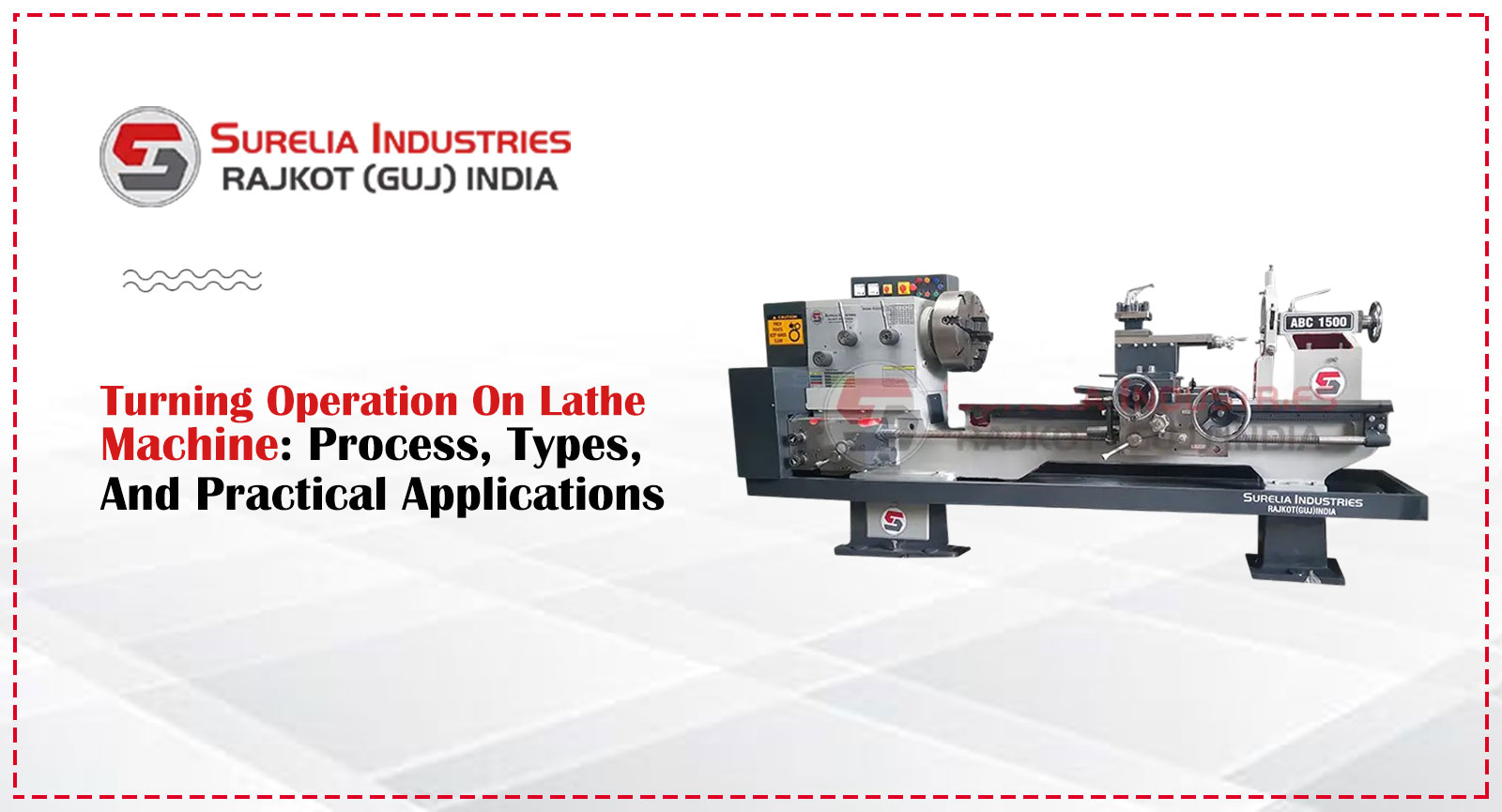
Think of lathe turning as an important part of modern manufacturing; it is the ultimate way to transform a raw piece of metal into a precise, functional part using this machine. This process is commonly known as the Turning Operation on a Lathe Machine. In simple terms, the Turning Operation on a Lathe Machine works similarly. The material rotates at high speed while a sharp cutting tool carefully removes thin layers from the surface to shape the part with high accuracy. Whether it is a simple bolt, a sturdy axle, or a custom engine component, the lathe makes it happen by shaving off material until the perfect cylindrical shape emerges. While manual machines are still useful for small repairs and workshop jobs, most industries now rely on automated systems for higher precision and efficiency. Modern machines combine traditional machining methods with advanced technology to deliver accurate and consistent results. Many large scale workshops also use a Heavy Duty Lathe Machine when working with oversized or heavy metal components that require extra strength and stability during machining.
What is the Turning Operation on a Lathe Machine?
- The Grip: You lock your raw material (usually a round bar of metal or wood) into the machine.
- The Spin: The machine spins that material at high speeds.
- The Shave: You bring a sharp, hardened cutting tool against the spinning surface. It shaves off a thin layer of material as it moves down the length of the bar.
In modern workshops, Lathe Machine Manufacturers design machines that make this process faster, safer, and more accurate for different industrial needs.
Why Professionals Use It
- It’s Clean: It creates a smooth, polished finish right off the machine.
- It’s Accurate: The machine can remove very small amounts of material to achieve precise dimensions and a proper fit.
- It’s Versatile: You can make a straight cylinder, a tapered cone, or even intricate grooves for O-rings.
Because there are different Types of Lathe Machine available today, manufacturers can choose the right machine depending on the size of the workpiece and the level of precision required. For larger industrial parts, operators often rely on a Heavy Duty Lathe Machine to ensure strong support, steady rotation, and consistent cutting accuracy.
Where Do You See It?
- Automotive: Axles, crankshafts, and piston heads made using a Lathe Machine.
- Home: Table legs, door knobs, and even the screws holding your phone together.
- Industrial: Hydraulic cylinders and massive ship propellers.
In heavy engineering industries, a Heavy Duty Lathe Machine is commonly used to machine large shafts, industrial rollers, and heavy mechanical components.
Types of Turning Operations
- Straight Turning: This is the most basic move. We shave the metal in a straight line to make the part thinner and perfectly even from end to end.
- Taper Turning: To create a cone shape, we move the tool at an angle. This makes the part wider at one end and narrower at the other.
- Step Turning: In this process, the cutting tool removes material at different depths along the workpiece, creating sections with different diameters.
- Contour Turning: In this process, the cutting tool follows a curved or complex path to create smooth profiles or custom shapes on the workpiece.
Many Lathe Machine Manufacturers continue to improve machine technology so these operations can be completed with greater speed and precision.
Advantages of Turning Operation
- High Precision: A Lathe Machine helps produce perfectly round parts with very high accuracy. It is widely used when components like shafts or hubs need an exact fit with parts such as bearings.
- Smoother Surface Finish: Because the tool moves in one smooth, continuous path, you get a clean, professional finish right off the machine. This usually saves you the time and cost of extra polishing or grinding.
- Flexible Operation: Whether you’re using a manual lathe for a quick repair or a multi-axis CNC for a complex run, turning handles almost any material, from aluminum to hardened steel, with ease.
For large-scale machining jobs, a Heavy Duty Lathe Machine offers stronger construction and better stability, making it ideal for continuous industrial use.
Conclusion
Whether you’re working in a small workshop or running a massive production line, turning on a Lathe Machine is still the most reliable way to create perfect round parts. At Surelia Industries, we believe that spinning your workpiece against a sharp tool is the secret to getting those exact measurements and a professional, smooth finish. From everyday car parts to high-tech aerospace gear, our advanced lathes make the whole process faster and easier, helping you get top-quality results without any problem.

Surelia Industries
Surelia Industries has immense expertise in the manufacturing of lathe machine. We have been providing top quality Lathe Machine to our clients since 1975.