Overview
Choosing the right supplier for an industrial lathe machine is just as important as choosing the machine itself. In this blog, we look at how to check a supplier’s experience, whether they make their own machines, the build quality of the machine, the range and customisation they offer, accuracy testing, after-sales support, spare parts and the real cost of buying. By the end, you will have a simple checklist to use before you place an order.
What’s Inside This Blog
- Why the Supplier Matters as Much as the Machine
- Check Their Experience and Manufacturing Background
- Look at Industrial Lathe Machine Quality and Build
- Ask About Range and Customisation
- Check Accuracy, Testing and Certifications
- After-Sales Support and Spare Parts
- Compare Prices the Right Way
- Questions to Ask Before You Buy
- Choose With Care and Take the Next Step
- Frequently Asked Questions
Introduction
Buying an industrial lathe machine is a big decision for any workshop or factory. It is not only about the price or the name on the machine. The supplier you choose decides how smoothly your production runs for the next ten or fifteen years.
India has many sellers to choose from. Some have real technical knowledge and years of experience. Others only trade machines and disappear when a problem comes up. This blog explains what to check before you place an order, so you can make a safe and informed choice.
Why the Supplier Matters as Much as the Machine
Two suppliers can offer machines that look almost the same on paper. The difference shows up later, during installation, training, breakdowns and spare part requests.
A good supplier treats the sale as the start of a long relationship. They help you pick the right model, guide your team during setup and stay available when you need help. A weak supplier delivers the machine and stops answering calls. For a factory that depends on one industrial lathe machine to complete daily orders, that kind of silence can mean lost production and unhappy customers.
Check Their Experience and Manufacturing Background
Start with simple questions. How long has the company been in this business? Do they make their own machines, or do they only resell machines made by others?
A genuine lathe machine manufacturer controls the design, fabrication and testing of its machines. This matters because the company can explain every part of the machine, fix design issues and offer changes when your job needs something special. A trader can only pass your questions on to someone else, which takes time and often gives half answers.
Ask to see their workshop or factory, either in person or through a video call. A real manufacturer will be happy to show you the production floor, the testing area and the quality checks. If a supplier avoids this, take it as a warning sign.
Look at Industrial Lathe Machine Quality and Build
The body of the machine tells you a lot. Look at the bed, which should be made from good quality cast iron with proper stress relieving. A weak or poorly treated bed can bend or vibrate over time, and that directly spoils the accuracy of your work.
Check the headstock, spindle and gears. Spindle bearings should be of reliable make, and gears should be hardened and ground for smooth and quiet running. Ask about the brand of motor, electrical parts and control panel as well. Cheap parts inside a heavy-looking machine cause trouble within a year or two.
If possible, run a trial cut on your own material. It is the quickest way to see how an industrial lathe machine behaves under real load, and no brochure can show you that.
Ask About Range and Customisation
Every workshop is different. One unit may turn small shafts all day. Another may handle long rollers or heavy forgings. A supplier with a wide range of models can match the machine to your job instead of forcing a standard one on you.
Ask about swing over bed, distance between centres, spindle bore and motor power. Make sure these match the largest job you expect, not only today’s job. Many buyers choose a size that is too small to save money, then struggle when bigger orders arrive.
Also ask whether the supplier can customise the machine. Extra tooling, special chucks, digital readouts or a different bed length are common requests. A good supplier will discuss them openly and give you clear delivery timelines.
Check Accuracy, Testing and Certifications
A machine is only useful if it holds accuracy. Ask for the test chart or inspection report that comes with each machine. It should show alignment checks, spindle run-out and parallelism results.
Ask what quality standards the company follows. Certifications such as ISO show that the company has a documented process for making and checking its products. They do not replace your own inspection, but they are a good sign.
After-Sales Support and Spare Parts
This is where many buyers regret their choice. Before you buy, ask a few direct questions. Who will install the machine? Will your operators get basic training? How long is the warranty, and what does it actually cover?
Ask about spare parts as well. Parts like gears, belts, bearings, lead screws and tool posts will wear out with regular use. If the supplier keeps stock and can send parts quickly, your downtime stays short. If parts take weeks to arrive, your production suffers.
Find out whether the supplier has service engineers and how fast they respond. A phone number that works and a team that picks up is worth more than a small discount.
Compare Prices the Right Way
Price matters, but the lowest quotation is rarely the best one. A cheaper machine with weak parts and poor support often costs more in repairs and lost time.
Think about the total cost of ownership. Look at power use, maintenance needs, spare part prices and expected life. When you look at it this way, a well-built industrial lathe machine from a trusted supplier usually proves to be the better investment over time.
Questions to Ask Before You Buy
Before you finalise anything, keep this short list in mind:
- Do you make the machine yourself, or do you resell it?
- Can I visit your factory or see a trial run?
- What accuracy report comes with the machine?
- What is covered in the warranty, and for how long?
- How quickly can you supply spare parts?
- Can you share details of customers who bought the same model?
Choose With Care and Take the Next Step
A lathe stays in a workshop for many years, so the supplier should be someone you can trust for just as long. Check their experience, machine quality, support and total price, and do not rush the decision.
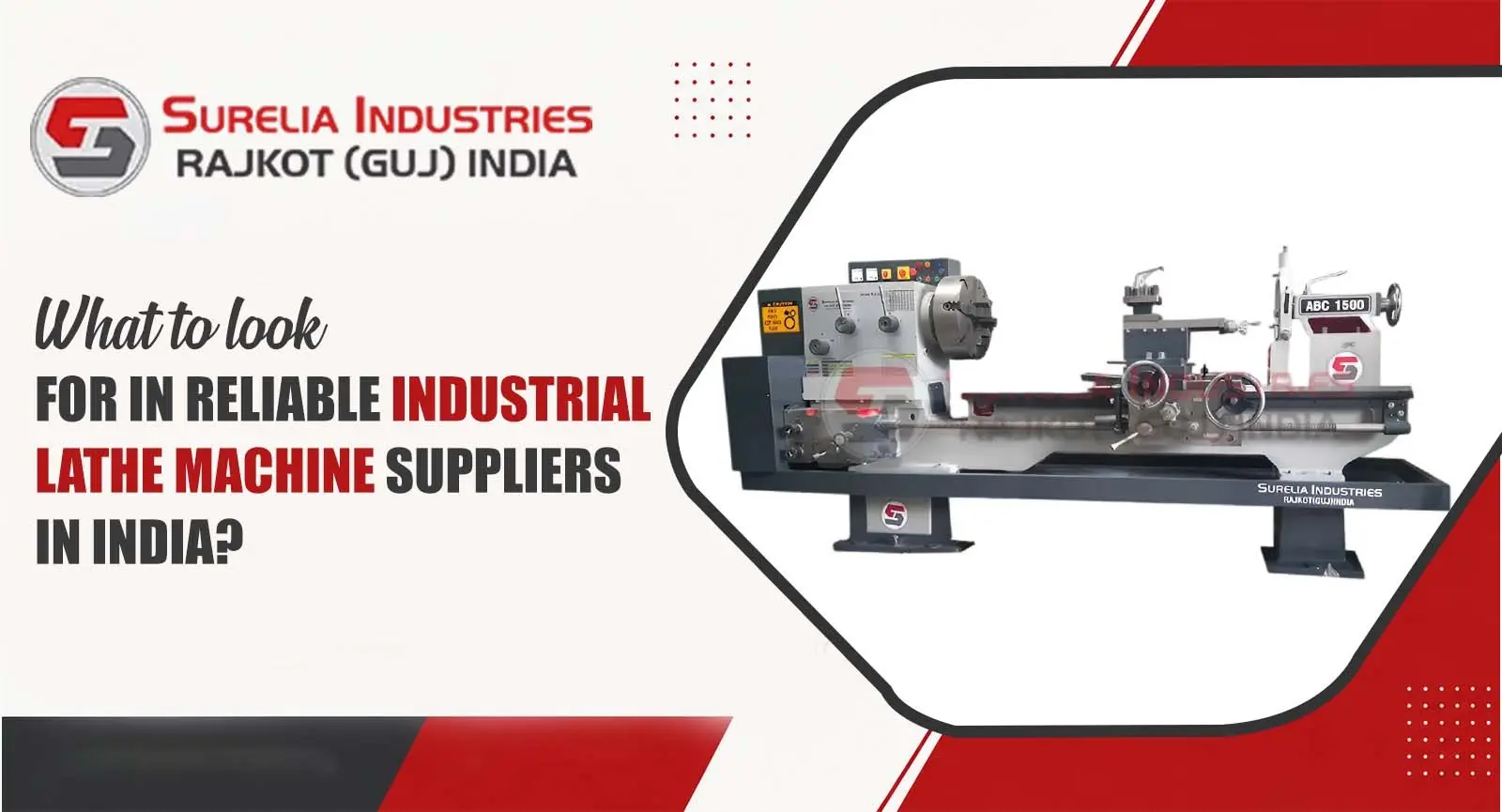
If you are planning to buy or upgrade, you can look at the range offered by Surelia Industries. Go through the models, note down your size and power needs, and get in touch with the team to discuss what suits your work. A short conversation now can save you a lot of trouble later when choosing your next industrial lathe machine.
Frequently Asked Questions
How long does delivery take?
Can the lathe be customised for my job?
What does the warranty cover?
Do you provide installation and training?

Surelia Industries
Surelia Industries has immense expertise in the manufacturing of lathe machine. We have been providing top quality Lathe Machine to our clients since 1975.